“The more that you read, the more things you will know. The more that you learn, the more places you’ll go.”
Dr. Seuss
Reading
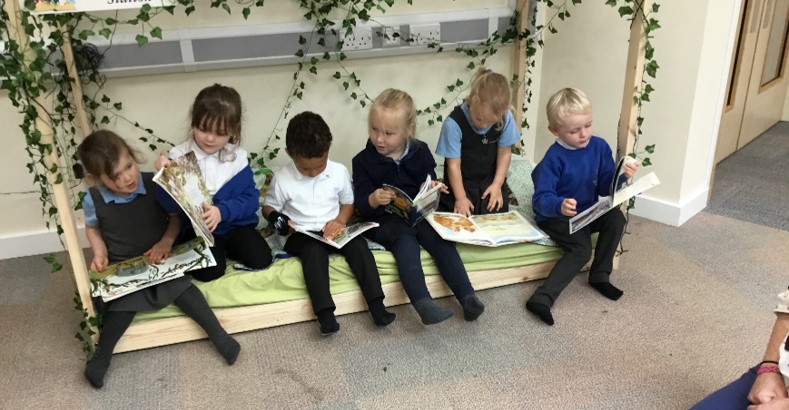
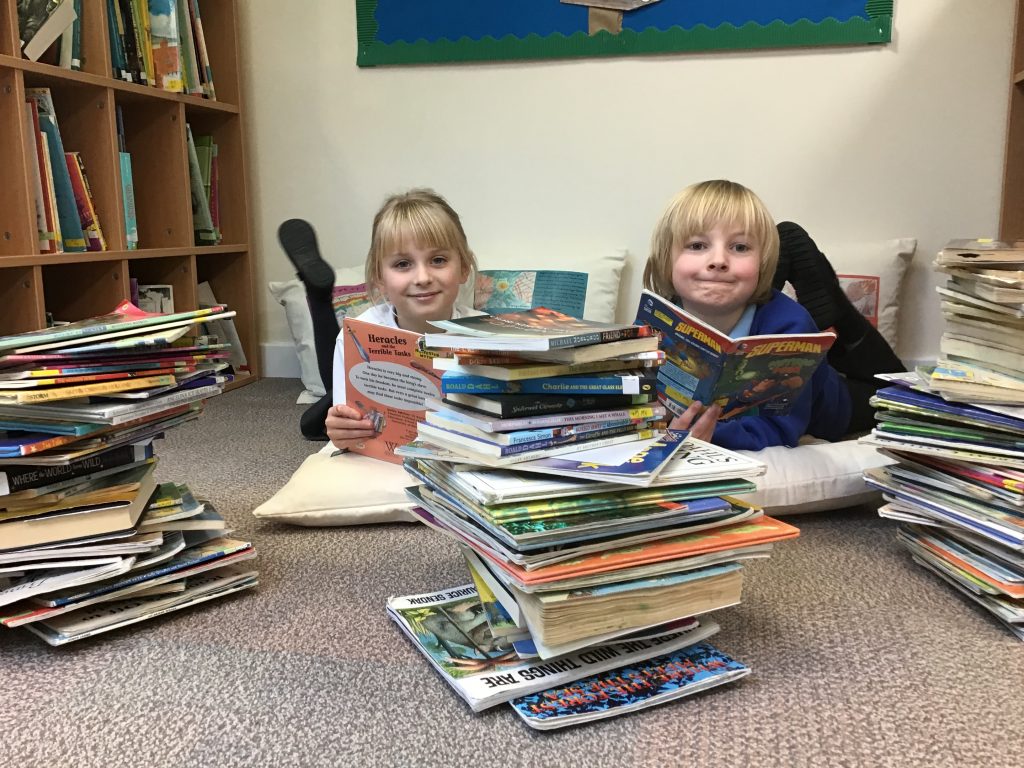
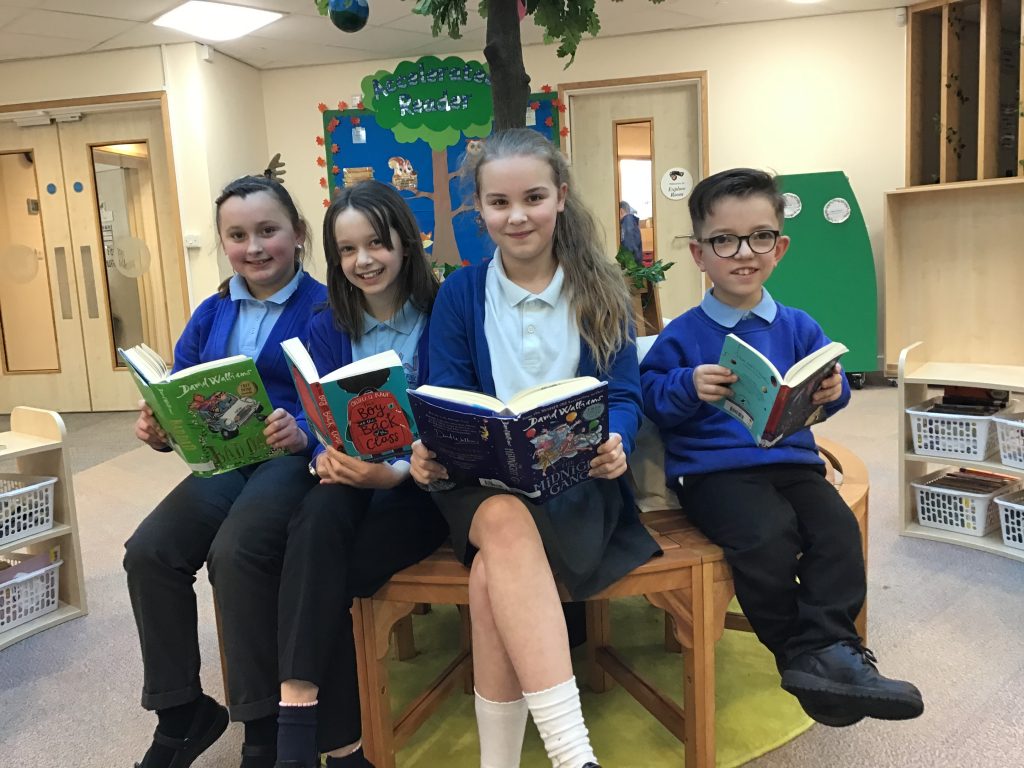
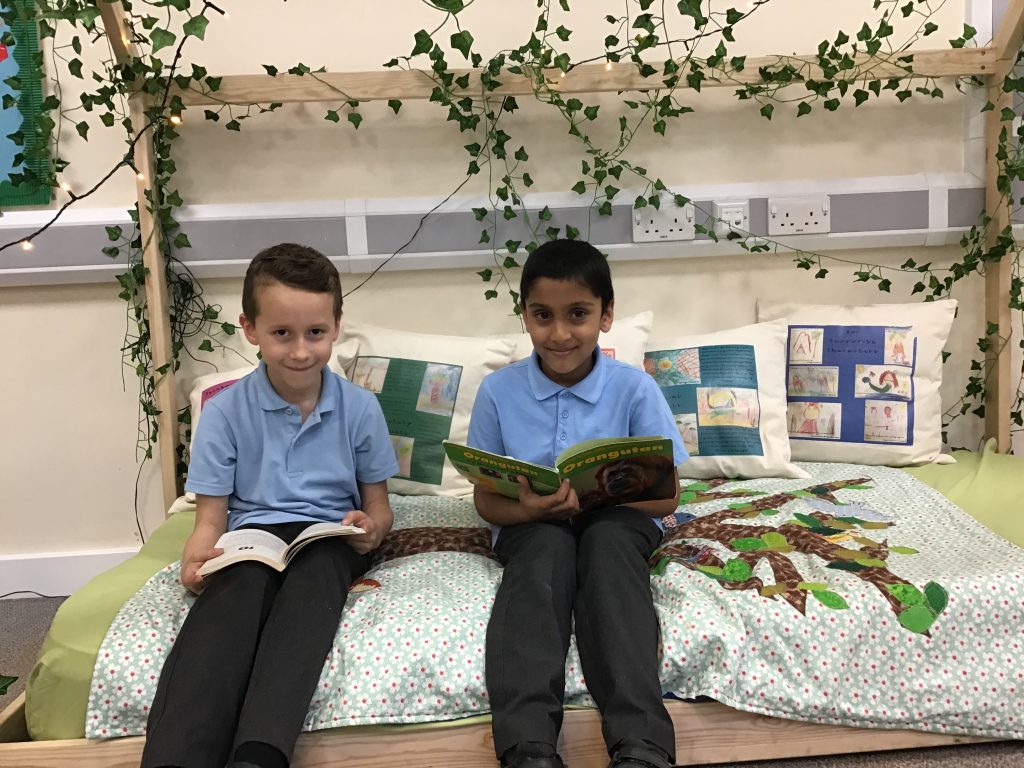
Reading is at the heart of our curriculum. Through the CUSP Reading curriculum, we want every child to become a confident, fluent and thoughtful reader who enjoys books and uses reading to understand the world around them. We aim to develop children who can read with meaning, discuss ideas clearly and develop a lifelong love of literature.
Our reading curriculum is ambitious, carefully sequenced and built on evidence‑led practice, ensuring all children can succeed.
How reading is taught
Reading lessons follow a consistent structure across the school so pupils know what to expect and can focus fully on the text. Each lesson is built around three core principles:
- Explicit vocabulary instruction – children are taught the meanings of important words directly
- Reading fluency – pupils practise reading aloud with expression and confidence
- Thinking hard about texts – pupils are encouraged to explain, infer, connect and respond thoughtfully
Children read every day, and lessons are carefully designed to help them understand the text deeply, not just answer questions.
The Literature Spine
At the centre of our reading curriculum is a carefully chosen Literature Spine. This is a planned sequence of high‑quality books that children study across the year and throughout their time at primary school.
The Literature Spine ensures children experience:
- Classic and modern fiction
- Poetry, non‑fiction and picture books
- Texts from different cultures, time periods and perspectives
Books are chosen to act as “windows, mirrors and doors” – helping children see the wider world, reflect on their own experiences and explore new ideas.
Across the year, pupils study texts in two‑week blocks, allowing time to read whole books, revisit key sections and think deeply about themes, characters and authorial choices. Some longer novels are studied over more than one block.
Making connections and meaning
Reading lessons help children go beyond basic comprehension. Pupils learn to:
- Retrieve key details
- Summarise and explain ideas
- Understand themes and authorial intent
- Make comparisons across texts
- Express personal opinions respectfully
Books are often linked to learning in other subjects, helping children connect reading to history, geography, science and wider life.
How we support all readers
The CUSP Reading curriculum is fully inclusive. Lessons are adapted so that all pupils can access high‑quality texts, including those who need extra support. This may include:
- Additional modelling and scaffolding
- Alternative ways to respond (spoken or written)
- Targeted vocabulary support
Writing
Writing is a vital life skill. Through the CUSP Writing curriculum, we aim to develop children who can communicate clearly, confidently and purposefully, using writing to express ideas, tell stories, explain thinking and engage with the world around them.
Our writing curriculum is ambitious, carefully structured and built on evidence‑led practice so that all pupils can succeed and flourish as writers.
How writing is taught
Writing is taught through clear, well‑sequenced units that explicitly teach children how writing works, not just what a finished piece should look like. Pupils learn both the knowledge of writing (grammar, sentence structure and text conventions) and the process of writing (planning, drafting, editing and improving).
Teachers model high‑quality writing and guide pupils step by step, gradually increasing independence as confidence grows.
Building strong writers
The curriculum focuses on four key strands that develop together over time:
- Sentence and grammar knowledge – how sentences are constructed and how language choices affect meaning
- Composition – organising ideas clearly for different purposes and audiences
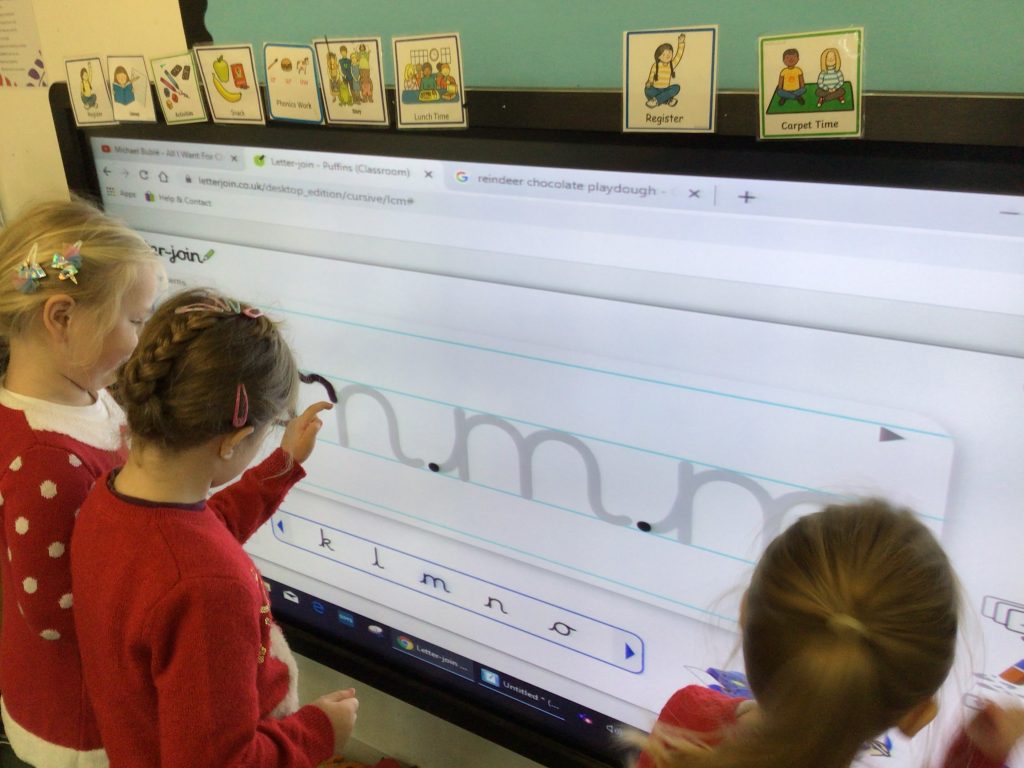
- Transcription skills – handwriting, spelling and accuracy
- Writing processes – planning, drafting, revising and editing
Children master writing at sentence level first, before moving on to longer pieces, ensuring secure foundations.
A carefully sequenced curriculum
Rather than rushing through many text types, pupils revisit a smaller number of carefully chosen forms across the school. This “reduce and revisit” approach allows children to deepen understanding and apply skills more confidently each time.
Across the year, pupils write:
- Narratives and stories
- Poetry
- Information and explanation texts
- Persuasive, discursive and formal writing (as they get older)
Each text type is studied twice, allowing pupils to first learn and then refine and apply their skills more independently.
Links to reading and the wider curriculum
Writing units are closely linked to books studied in Reading and to learning in subjects such as history, geography and science. This gives pupils meaningful contexts for writing and reduces cognitive overload, allowing them to focus on writing well rather than trying to understand new subject matter at the same time.
Inclusion and support
The CUSP Writing curriculum is designed to meet the needs of all learners. Tasks, models and scaffolds are adapted where needed, ensuring that every child can access high‑quality writing experiences and enjoy success.