
Find out about our CUSP Early Maths at the bottom of this page!
Our vision
Mathematics equips children with the knowledge, skills and confidence they need to understand the world, solve problems and reason logically. At our school, we believe that all children can succeed in maths through high‑quality teaching, clear structure and well‑sequenced learning.
We deliver our mathematics curriculum using the White Rose Maths scheme of learning, which supports deep understanding, confidence and fluency for every child.
How mathematics is taught
Mathematics is taught daily in all year groups. Lessons are carefully planned to help pupils:
- Build secure mathematical understanding
- Make connections between concepts
- Develop confidence and independence
White Rose Maths structures learning so that new ideas are introduced step by step, with regular opportunities to revisit and practise prior learning.
The White Rose approach
White Rose Maths is based on a mastery approach, meaning pupils spend longer developing a deep understanding of key concepts before moving on. Learning focuses on quality rather than speed.
Key principles include:
- Small steps – learning is broken into manageable, carefully sequenced chunks
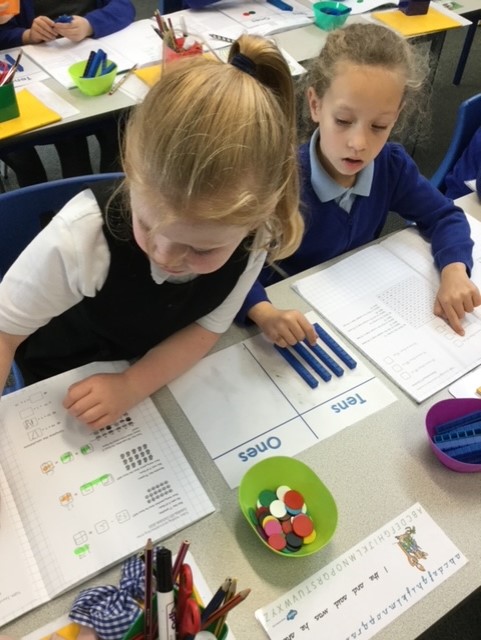
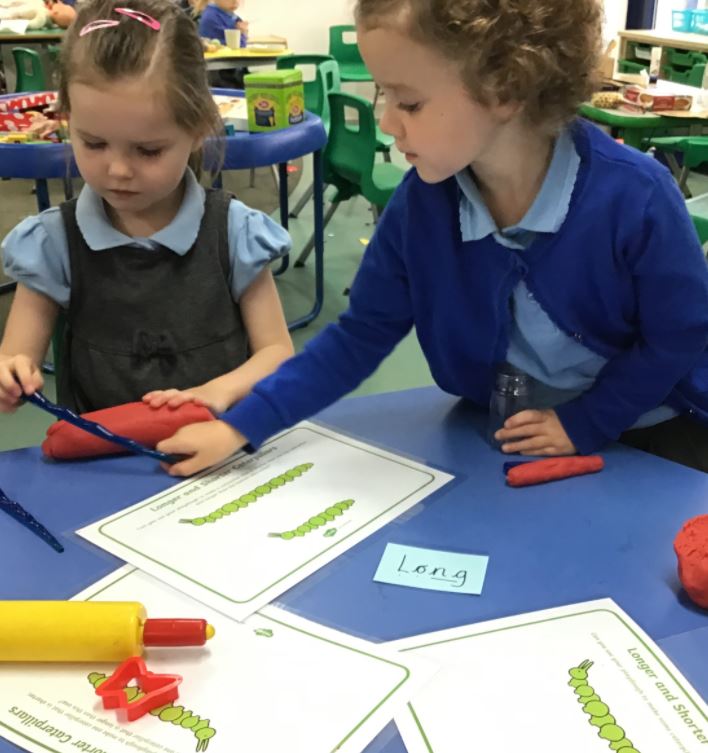
- Concrete, pictorial, abstract (CPA) – pupils use practical equipment, pictures and symbols to develop understanding
- Same learning goal, different support – all pupils learn the same mathematics, with appropriate scaffolding or challenge
- Reasoning and problem‑solving – pupils are encouraged to explain their thinking and apply learning in different contexts
What children learn
Mathematics learning builds cumulatively from Year 1 to Year 6. Core areas of study include:
- Number and place value
- Addition, subtraction, multiplication and division
- Fractions, decimals and percentages
- Measurement (length, mass, time, money, capacity)
- Geometry (shape, position and direction)
- Statistics and data handling
As pupils progress, they revisit key concepts regularly, strengthening understanding and confidence.
Fluency, reasoning and problem‑solving
Every maths lesson includes opportunities for pupils to:
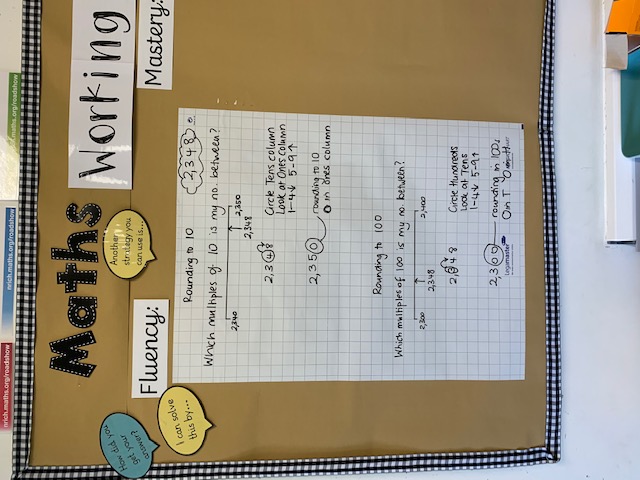
- Develop fluency – accurate, efficient recall and use of number facts and methods
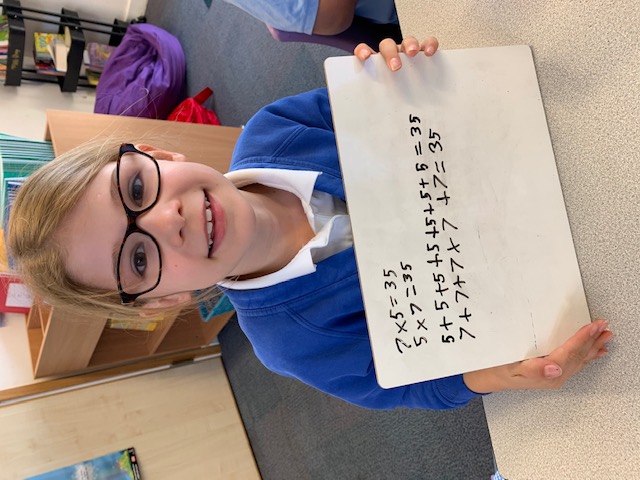
- Reason mathematically – explain thinking, justify answers and spot patterns
- Solve problems – apply learning to real‑life and unfamiliar situations
Children are taught to use correct mathematical vocabulary and to articulate their ideas clearly.
Mistakes as learning
We promote a positive attitude to mistakes. Pupils are encouraged to:
- Explore different strategies
- Learn from errors
- Persevere with challenging problems
This helps develop resilience, confidence and a growth mindset in mathematics.
Assessment and progress
Assessment in maths is ongoing and purposeful. Teachers assess understanding through:
- Daily questioning and discussion
- Practice tasks and reasoning activities
- Low‑stakes quizzes and retrieval activities
Progress is monitored over time to ensure pupils are:
- Securing core knowledge
- Building fluency
- Applying skills independently
The focus is on long‑term learning, not short‑term performance.
Inclusion and support
White Rose Maths is designed so that all pupils can access the same ambitious curriculum. Teachers adapt lessons through:
- Use of practical resources and visuals
- Carefully chosen questions and examples
- Additional support or challenge where needed
Pupils with SEND are supported to succeed alongside their peers wherever possible.
In summary
Through our mathematics curriculum, children leave primary school with:
- Secure understanding of key mathematical concepts
- Confidence in number and problem‑solving
- Ability to reason clearly and explain thinking
- Positive attitudes towards challenge and learning
Mathematics at our school supports pupils to think logically, work accurately and apply their learning confidently – skills that underpin success across the curriculum and beyond.
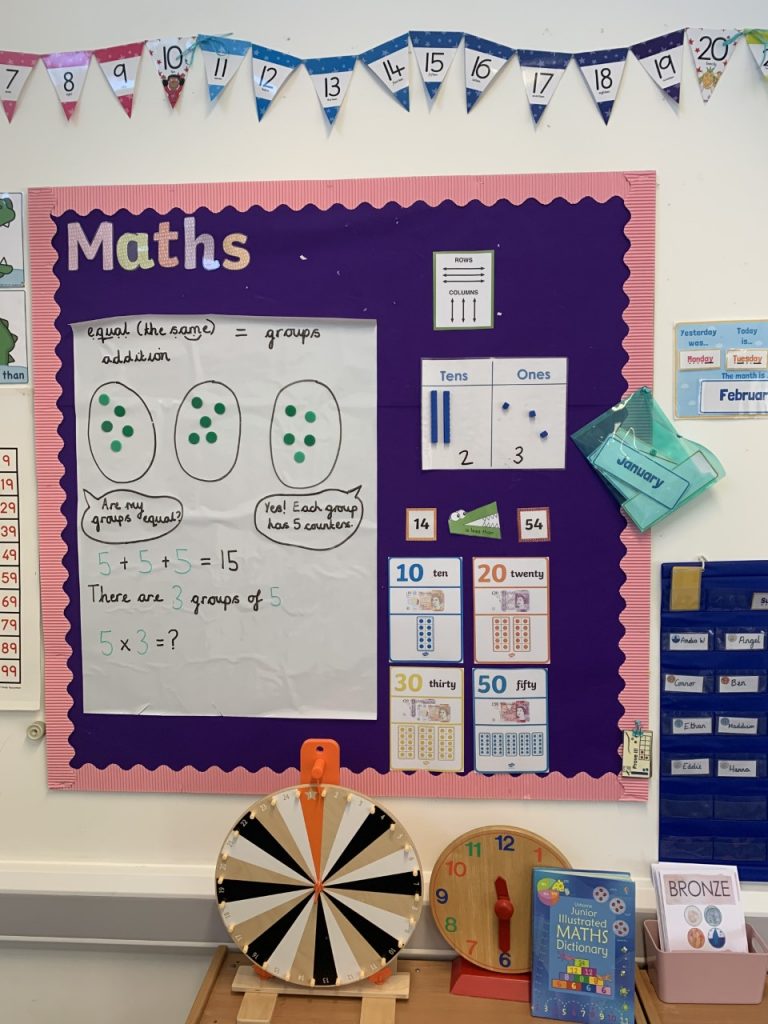
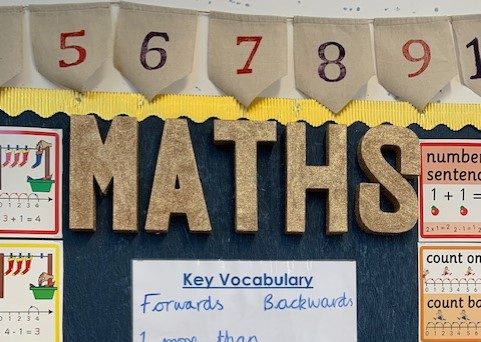
Early Mathematics in the Early Years
In the Early Years Foundation Stage (EYFS), mathematics is taught through CUSP Early Maths, a carefully designed curriculum that ensures children develop the essential foundations for future success in mathematics.
The central goal of CUSP Early Maths is to develop a strong grounding in number and mathematical thinking, so that all children are well prepared for Key Stage 1 and beyond. Research shows that early mathematical understanding is a strong predictor of later academic success, making high‑quality early maths provision vital.
How Early Mathematics is taught
CUSP Early Maths combines direct teaching, play‑based learning and regular revisiting to help children build secure understanding that lasts.
The curriculum is structured around three key elements:
- Foundational knowledge
Clear expectations for what children should know and be able to do in early mathematics, carefully sequenced to support progression into Year 1. - Opportunities and experiences
Rich, purposeful activities within continuous provision that allow children to explore mathematical ideas through play, investigation and talk. - Maths Moments
Short, daily sessions that revisit core concepts using spaced practice, helping children commit key ideas to long‑term memory.
What children learn
Early maths learning focuses on developing confident, flexible mathematicians through:
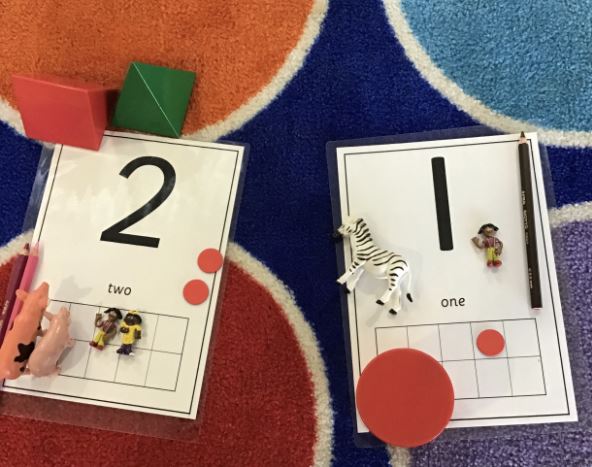
- Secure understanding of number, particularly 0–10
- Counting, subitising and recognising quantities
- Exploring patterns, connections and relationships
- Early reasoning and problem‑solving
- Developing spatial awareness and mathematical language
Concepts are broken down into small, manageable steps and revisited frequently, allowing children to build deep understanding rather than surface knowledge.
Teaching approach
CUSP Early Maths uses an Early Years‑adapted version of the CUSP six‑phase lesson structure, ensuring lessons are clear, purposeful and responsive to children’s needs. Teaching balances:
- Explicit instruction of key concepts
- Live modelling using practical manipulatives
- Guided group work for children who need additional support
- Carefully planned opportunities for independent practice and exploration
Teachers are encouraged to respond flexibly to their cohort, adapting the sequence and using built‑in flexible time to address gaps or misconceptions.
Learning through play
Mathematics is woven throughout the EYFS day. Children regularly encounter maths through:
- Classroom routines (registers, calendars, voting, counting)
- Continuous provision indoors and outdoors
- Adult‑led and child‑initiated activities
This helps children see mathematics as meaningful, relevant and enjoyable, rather than separate from everyday life.
Adaptive practice and inclusion
CUSP Early Maths is designed to support all learners, including children with SEND. Teachers adapt learning through:
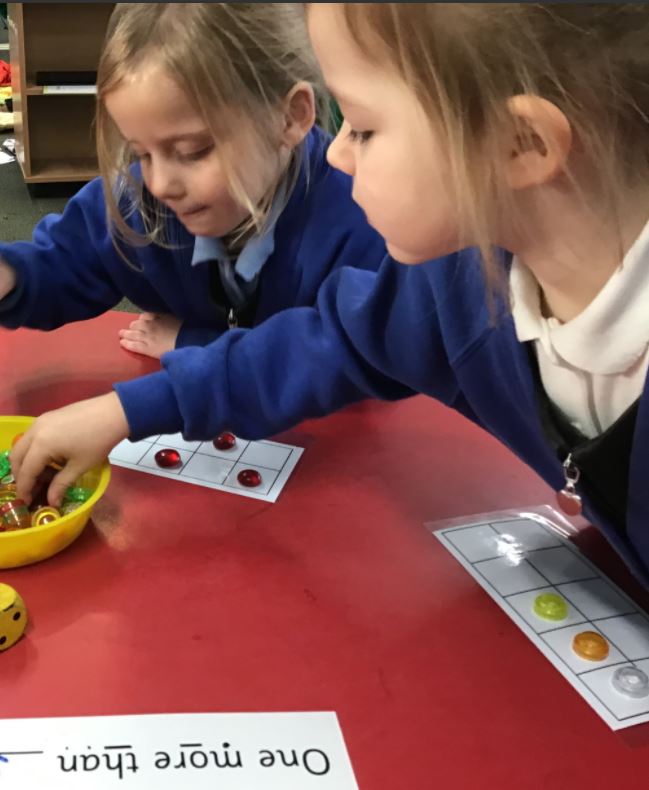
- Purposeful use of manipulatives
- Clear stem sentences to support mathematical talk
- Additional modelling and guided groups
- Frequent revisiting of high‑utility concepts
The focus is always on helping every child make progress from their individual starting point.
Preparing for Key Stage 1
By the end of Reception, children have developed:
- Secure early number understanding
- Confidence in talking about mathematics
- Familiarity with practical and pictorial representations
This provides a smooth, coherent transition into the more formal mathematics curriculum in Year 1, where pupils move from CUSP Early Maths into White Rose Maths with confidence and strong foundations in place.