Our vision
History helps children understand the world by learning about people, places, events and change over time. Through the CUSP History curriculum, pupils develop a strong sense of chronology, learn how societies have changed and understand how the past continues to shape the present.
Our history curriculum is ambitious, carefully sequenced and built on evidence‑led practice so that all pupils can succeed and think deeply about the past.
What children learn
History is taught through carefully planned studies that build cumulatively from Early Years to Year 6. Pupils revisit key ideas and periods over time, helping them develop a secure and connected understanding of the past.
Children learn about:
- Changes within and beyond living memory
- Significant people, places and events
- British history, including local history
- Ancient civilisations and non‑European societies
- Conflict, power, democracy and migration
These studies help pupils place historical events within a clear and developing timeline.
Big ideas in History
History learning is organised around powerful concepts that run through the curriculum, including:
- Community – how people lived together
- Knowledge – how discoveries and ideas brought change
- Power – who ruled and why
- Invasion and conflict – causes and consequences
- Civilisation – how societies developed
- Democracy and rights – how people have influenced government
These ideas help pupils make sense of different periods and compare them meaningfully.
Thinking like a historian
Alongside learning historical facts, pupils develop disciplinary knowledge — learning how historians work. They are taught to:
- Ask historical questions
- Understand chronology
- Explain cause and consequence
- Identify change and continuity
- Compare similarity and difference
- Use evidence to support explanations
- Consider historical significance
This enables pupils to go beyond remembering events and begin reasoning about the past.
A carefully sequenced curriculum
History learning is deliberately sequenced so that pupils build a coherent mental timeline. Each new study connects with prior learning, allowing pupils to become more confident and knowledgeable as they progress.
Examples of what pupils study include:
- Changes in daily life over time
- The Stone Age to the Iron Age
- Roman Britain, Anglo‑Saxons and Vikings
- Ancient Egypt, Shang Dynasty, Ancient Greece
- The Maya or Kingdom of Benin
- The Second World War and the Windrush generation
Vocabulary, reading and sources
Strong emphasis is placed on historical vocabulary, taught explicitly to help pupils explain their thinking clearly. Pupils also engage with:
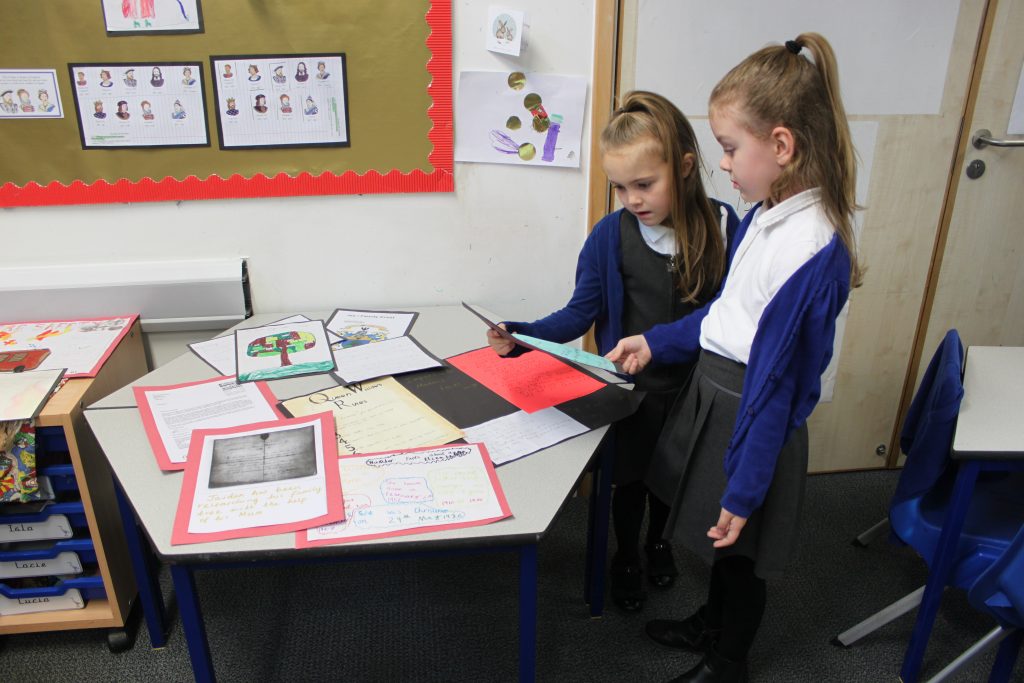
- Written sources, images and artefacts
- Historical accounts and non‑fiction texts
- Local and primary sources where possible
This helps pupils understand how we know about the past.
Assessment and progress
Assessment in history is ongoing and purposeful. Teachers check understanding through discussion, questioning, retrieval activities and written or verbal explanations.
Progress is measured by how well pupils:
- Remember and use historical knowledge
- Explain events and changes clearly
- Apply historical reasoning and vocabulary
The focus is on long‑term learning, not short‑term recall.
Inclusion and support
The CUSP History curriculum ensures all pupils access the same ambitious content. Lessons are adapted where needed through clear explanations, structured tasks, visual supports and alternative ways to record learning.
In summary
Through the CUSP History curriculum, children leave primary school with:
- A secure understanding of the past and chronology
- Knowledge of significant people, events and civilisations
- The ability to explain change, cause and significance
- A stronger sense of identity and understanding of the modern world
History at our school helps pupils understand who we are, where we came from, and how the past shapes the future.