Our vision
Geography helps children make sense of the world — where places are, what they are like and how people and environments are connected. Through the CUSP Geography curriculum, pupils develop a deep understanding of place, space and the relationships between people and the planet, preparing them to be informed, responsible global citizens.
Our geography curriculum is ambitious, carefully sequenced and built on evidence‑led practice so that all pupils can succeed.
What children learn
Geography is taught through a series of carefully planned studies that build knowledge cumulatively from Early Years to Year 6. Pupils revisit key ideas regularly, allowing understanding to grow over time.
Children learn about:
- Location – where places are in the world
- Place – what places are like and how they are experienced
- Human geography – how people live, work and shape the environment
- Physical geography – natural features and physical processes
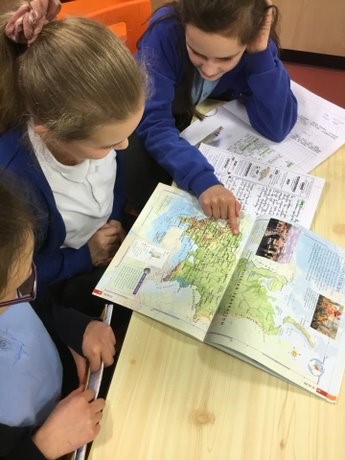
- Geographical skills and fieldwork – using maps, globes, atlases and investigating the local area
Thinking like a geographer
Alongside knowledge, pupils learn to think geographically. They ask and answer important questions, such as:
- Where is this place and why is it there?
- How is this place changing over time?
- How are people and environments connected?
- How does this place compare to others?
This helps pupils move beyond facts and develop reasoning, explanation and critical thinking.
A carefully sequenced curriculum
Geography learning is deliberately structured so that new knowledge builds on what pupils already know. Key concepts such as scale, connection, environment, culture and sustainability are revisited across year groups and applied in increasingly complex ways.
Examples of what pupils study include:
- Continents, oceans and countries
- Human and physical features of the local area
- Rivers, mountains, volcanoes and earthquakes
- Weather, climate, biomes and environmental regions
- Settlements, trade and population patterns
Maps, skills and fieldwork
Geographical skills are taught explicitly and practised regularly. Pupils learn to:
- Use maps, atlases and globes confidently
- Read and create maps, including Ordnance Survey maps
- Use compass points and grid references
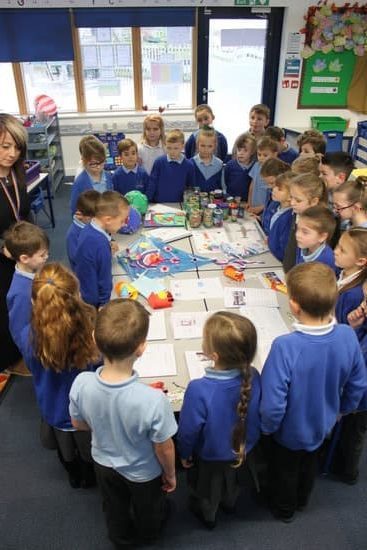
- Carry out local fieldwork and investigations
These skills help pupils understand places in both local and global contexts.
Vocabulary and reading
Strong emphasis is placed on geographical vocabulary, taught explicitly so pupils can describe the world accurately and confidently. Pupils also read high‑quality non‑fiction texts linked to geography studies, helping them build knowledge and deepen understanding.
Assessment and progress
Assessment in geography is ongoing and purposeful. Teachers check understanding through discussion, retrieval tasks, quizzes and pupils’ written or verbal explanations. Progress is measured by how well pupils:
- Remember and use key geographical knowledge
- Apply skills and vocabulary accurately
- Explain patterns, processes and relationships
The focus is on long‑term learning, not short‑term recall.
Inclusion and support
The CUSP Geography curriculum is designed so that all pupils can access the same ambitious content. Lessons are adapted where needed through clear explanations, visual supports, structured tasks and alternative ways for pupils to record their learning.
In summary
Through the CUSP Geography curriculum, children leave primary school with:
- Secure knowledge of the world and their place within it
- Strong map, enquiry and fieldwork skills
- The ability to explain how places are shaped and connected
- An understanding of environmental responsibility and sustainability
Geography at our school enables pupils to understand the world — and their role in it.