Our vision
Music is a powerful form of expression that supports creativity, confidence and wellbeing. Through the CUSP Music curriculum, pupils develop as skilled, confident and curious musicians, building knowledge, technique and appreciation of music from a wide range of cultures, traditions and time periods.
Our music curriculum is ambitious, carefully sequenced and built on evidence‑led practice so that every child can succeed, regardless of prior musical experience.
When and how music is taught
Music is taught from Year 1 to Year 6. Each year group follows six blocks of learning, usually taught in 45–60‑minute lessons, with flexibility for schools to divide this time into shorter sessions if needed.
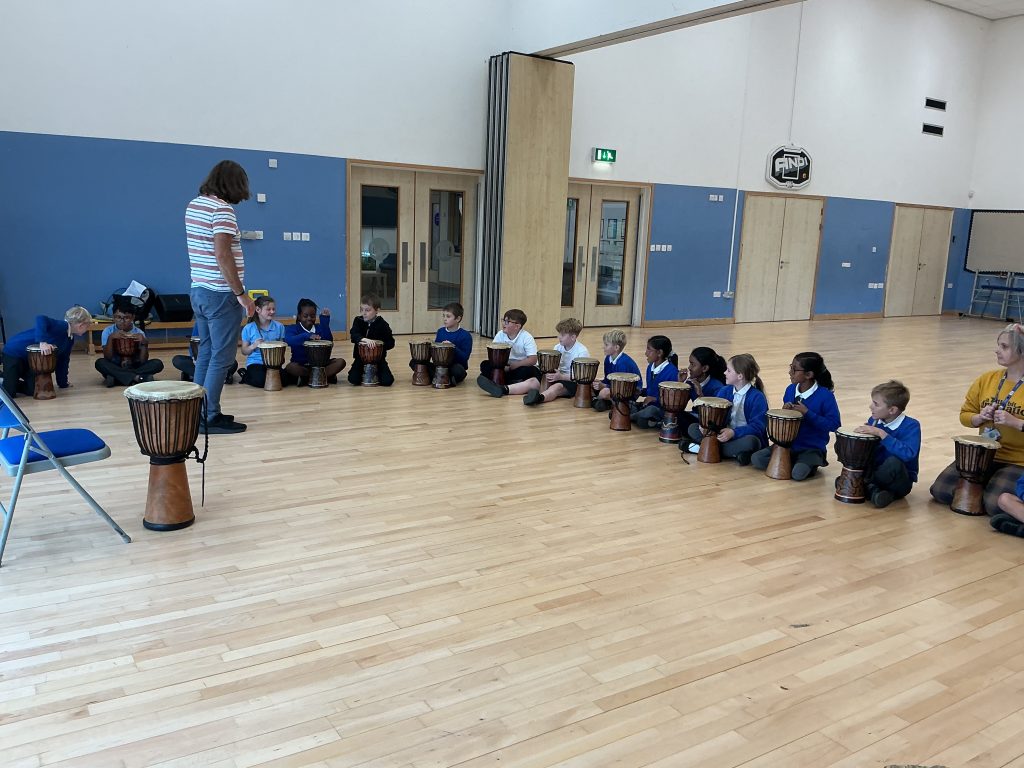
Across the year, pupils develop musical knowledge alongside practical skills such as singing, playing instruments and performing.
What children learn
The music curriculum is designed to build skills and understanding cumulatively over time. Pupils revisit and build on key concepts so that learning becomes secure and meaningful.
Core areas of study include:
- Singing
- Listening and appraising
- Playing tuned and untuned instruments
- Composing and improvising
- Reading musical notation
- Performing with confidence
Pupils experience a wide range of musical styles and genres, helping them develop both technical skills and musical enjoyment.
Becoming a musician
Music lessons balance knowledge about music with opportunities to become a musician. Pupils learn musical vocabulary and concepts, then apply this learning practically through performance and composition.
As pupils progress:
- In Key Stage 1, they focus on rhythm, pulse, singing and listening skills
- In Key Stage 2, they learn to play instruments such as the glockenspiel and later the keyboard
- By Year 6, pupils perform and compose confidently, individually and in groups
Listening, culture and inspiration
Music lessons introduce pupils to significant musicians and key musical works from different cultures and historical periods. This helps pupils understand music as part of wider human experience and cultural expression.
Pupils learn to talk about music using appropriate vocabulary, describing how music makes them feel and explaining their preferences thoughtfully.
Vocabulary and musical language
Clear musical language is taught explicitly and revisited regularly. Pupils gradually build a secure understanding of terms such as rhythm, pitch, tempo and dynamics, enabling them to describe and evaluate music accurately.
Assessment and progress
Assessment in music is continuous and formative. Teachers observe pupils singing, playing, composing and discussing music. Progress is shown by:
- Increased confidence in performance
- Growing technical accuracy
- Improved use of musical vocabulary
- Ability to explain and appraise music
The focus is on progress and musical development, not just final performances.
Inclusion and support
The CUSP Music curriculum is designed so that all pupils can access high‑quality music education. Lessons are adapted where needed through clear modelling, visual supports, structured tasks and flexible approaches to performance and recording.
In summary
Through the CUSP Music curriculum, children leave primary school with:
- Confidence in singing and playing instruments
- An understanding of musical elements and styles
- Experience of performing and composing
- Appreciation of music from different cultures and times
Music at our school helps pupils develop creativity, discipline and joy — building a lifelong connection to music.